On the 22nd of March, the world celebrated World Water Day, emphasizing the critical importance of clean water access. Effective health service delivery is essential for safeguarding the human right to the highest standard of health, a right threatened by persistent water shortages in healthcare settings. This opinion piece delves into the pervasive challenges of ensuring adequate and clean water supply in healthcare institutions. It underscores that this dilemma is complex and multifaceted, with severe consequences for quality health service delivery and eliciting an urgent plea for holistic solutions and concentrated attention.
The 2019 report by UNICEF and WHO reveals that only 51% of health facilities in sub-Saharan Africa have basic water services, with just 23% offering basic sanitation[1]. This deficiency hinders health facilities from maintaining hygiene, increasing infection risks, and compromising patient care, particularly in critical areas like infection control. The lack of clean water leads to complications and potential fatalities during surgical procedures, and healthcare-associated infections (HAIs) are prevalent due to poor water, sanitation, and hygiene (WASH) conditions. Maternal mortality rates remain high partly because of these challenges, affecting both maternal and neonatal health[2].
Moreover, as seen with the COVID-19 pandemic, WASH services are essential for both pandemic prevention and effective response. According to a report by the World Bank, investing in water and sanitation infrastructure, particularly in healthcare facilities, is one of the most cost-effective strategies for improving public health outcomes[3]. This investment not only enhances the capacity of health systems to manage and prevent infectious disease outbreaks but also supports overall health and well-being by ensuring safe environments for patients and healthcare workers.
The scarcity of water in African hospitals does not reside in a singular dimensional crisis; it is a multi-pronged challenge influenced by a variety of factors. These challenges include lack of basic water infrastructure and inadequacies in plumbing, storage, and distribution systems, thereby giving rise to discontinuous water supply and potential contamination threats and poor maintenance of water infrastructure in health facilities[4]. Even among healthcare institutions with some level of water access, the supply often teeters on the brink of unreliability, disruptively impacting critical medical procedures and essential sanitation efforts, thereby imposing a tangible threat to patient care and recovery.
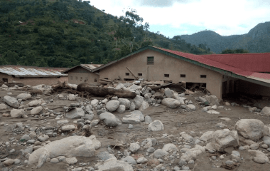
The unfortunate reliance of hospitals on potentially polluted river water or untreated groundwater renders them susceptible to the proliferation of waterborne diseases and nosocomial infections. This multifaceted predicament is further exacerbated by climate change and environmental factors, including persistent droughts and natural disasters, which unsparingly destabilize water supply and deepen the crisis. For example, the Kilembe hospital (Figure 1) in my country, Uganda, has on several occasions been hit by landslides and floods. During these times, the water supply of the hospital is significantly impacted. These disruptions not only compromise patient care but also pose severe risks to infection control and overall hospital operations. This once again emphasizes the call for a ‘One Health’ approach to health system delivery, recognizing the interrelated connection between human health and planetary health.
Efforts to chart a course through the water crisis in African hospitals, while intricate, are not insurmountable. Invigorating such efforts demands an unwavering commitment to investing in infrastructure, ensuring that governmental bodies, NGOs, and international organizations collectively prioritize the bolstering of hospital infrastructures to guarantee a reliable water supply and functional sanitation systems. Intertwining this with strategic investment in water treatment solutions, hospitals can purify available water through filtration, chlorination, and UV treatment, thereby safeguarding the water quality for patients and staff alike.
Building on the lens of a One Health approach [5], it is also vital that the water challenge in hospitals not be dealt with in silos. The looming effects of climate change further aggravate water issues, accentuating the need for system-based solutions that embrace a holistic perspective, intertwining the health of humans, animals, and ecosystems. Effective strategies must incorporate climate resilience and sustainable water management practices to ensure continuity of care in such vulnerable settings.
Thus, addressing water challenges in healthcare settings, particularly in hospitals, involves a multi-faceted strategy that assures quality, availability, and sustainable management of water resources[6]. Initially, internal water management systems within hospitals need to be optimized to ensure that water is used efficiently and safely. This might include implementing advanced water purification and recycling systems that guarantee the continuous availability of clean water for medical processes, thereby reducing dependency on external water sources and minimizing the impact in times of drought or other water shortages.
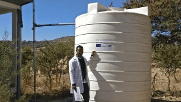
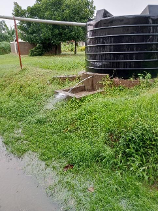
For instance currently, in Ethiopia’s Tigray Region: Doga and Demben, and Kenya’s in Kitui County authorities (Figure 2) are incorporating rainwater harvesting surfaces and structures as a viable strategy, affording a sustainable clean water source throughout rainy seasons, and thus diminishing dependency on often unpredictable municipal sources of water.
Moving forward, the bedrock of sustainable solutions will be rooted in intersectoral and multisectoral collaboration, wherein governments, NGOs, and the private sector converge to discover and implement innovative solutions to the water crisis, synergizing resources and expertise toward a common goal. The need for investment is urgent and multifaceted. Infrastructure improvements must include the construction and maintenance of reliable water supply systems and sanitation facilities, ensuring that healthcare institutions have consistent access to clean water. Additionally, capacity-building initiatives are essential to train healthcare workers and local communities in best practices for WASH services to prevent infections and improve health outcomes.
Governments must prioritize water and sanitation in their healthcare policies and budgets, recognizing that the health and economic benefits far outweigh the initial costs. International organizations can provide technical expertise, funding, and support for large-scale projects, while local communities can contribute valuable insights and manpower to maintain and sustain these efforts.
The integration of WASH initiatives into broader healthcare strategies is critical for long-term success. By addressing the root causes of the water crisis and fostering a collaborative approach, we can create a resilient healthcare system capable of delivering safe and effective care. On World Water Day and beyond, it is imperative to commit to these actions and work together to ensure that every healthcare facility has the necessary resources to provide the highest standard of care, ultimately improving public health outcomes across the region.

[1] https://data.unicef.org/resources/wash-in-health-care-facilities/
[2] https://www.unicef.org/press-releases/half-health-care-facilities-globally-lack-basic-hygiene-services-who-unicef
[3] https://www.worldbank.org/en/topic/water/brief/wash-water-sanitation-hygiene-and-covid-19
[4] https://www.unicef.org/rosa/water-sanitation-and-hygiene-wash
[5] https://www.cdc.gov/one-health/about/index.html#:~:text=One%20Health%20is%20a%20collaborative,plants%2C%20and%20their%20shared%20environment.
[6] file:///Users/user/Downloads/jmp-2022-wash-hcf.pdf
 International Working Group for Health Systems Strengthening
Leave a comment