“We have always relied on foreign aid, but the funding was never truly reflective of where the aid should be channelled. Instead, it always prioritized donor perspectives. Now, with the USAID freeze, HIV care programs that served millions of migrants have been forced to shut down. We need to rethink not just how we fund health systems, but how we structure global health financing altogether.” Aysha Farwin
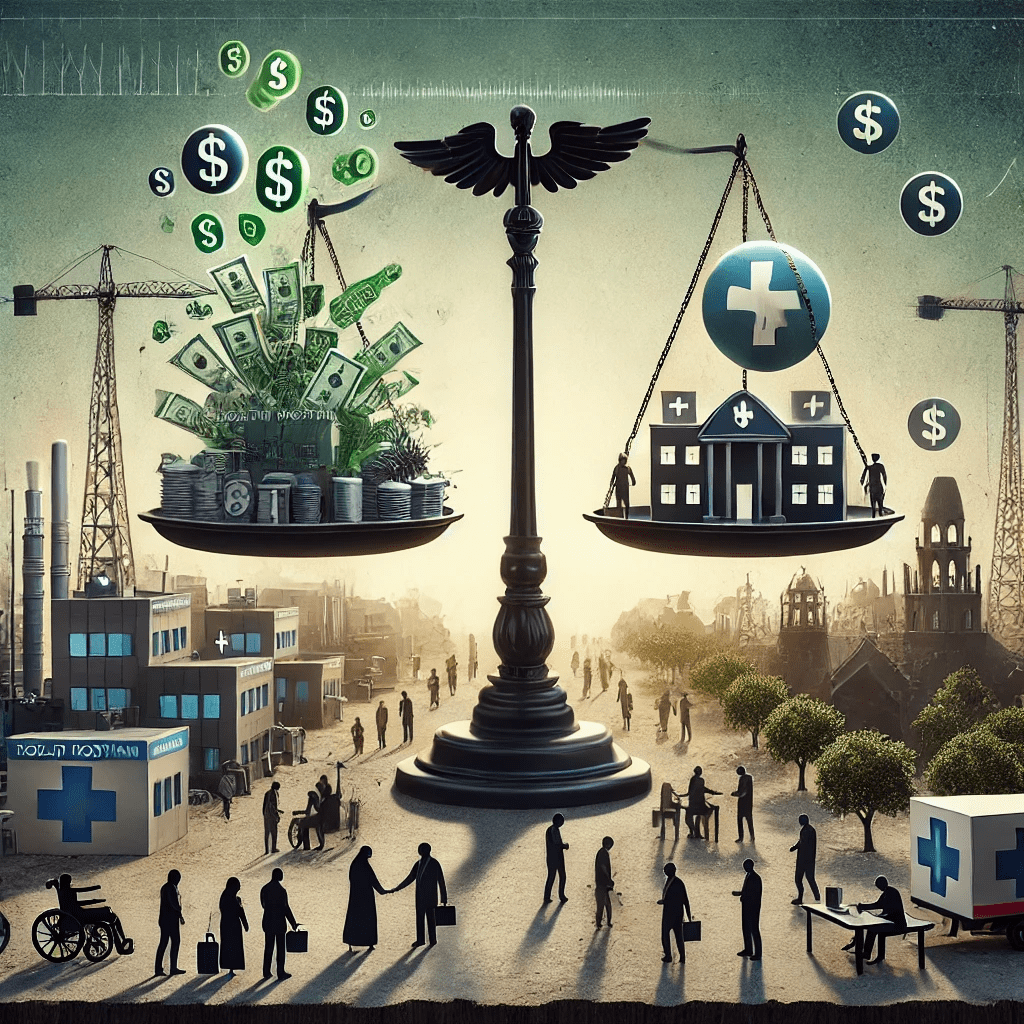
The global health financing landscape is undergoing a seismic shift. The freezing of USAID funds and the United States’ threats to withdraw from the WHO and other UN agencies have exposed the precarious foundation upon which many national health systems rest. The crisis has made it clear: health systems dependent on donor aid are fundamentally vulnerable to political and economic shifts beyond their control.
Our February 2025 IWG Think Tank session explored these urgent issues, focusing not only on how we arrived at this point, but also on what can be done to build a future where health systems are self-sustaining, resilient, and no longer at the mercy of external forces. In addition, the session sought to understand the direct impact of the funding pause on IWG members, highlighting the diverse ways in which it has disrupted health initiatives, research, and service delivery across multiple countries.
The fragility of donor-dependent health systems
One of the key observations from our discussion was the diverse and severe impact of the funding freeze. In South Africa, BB reflected on how clinics delivering essential HIV/AIDS care have lost many staff members who were being paid through USAID-funded NGOs. This has sparked urgent national conversations about why critical health workers—particularly those in HIV/AIDS programs—were not already integrated into the public health system. The crisis has exposed systemic weaknesses, raising fundamental questions about the long-term sustainability of externally funded health programs.
A similar situation is unfolding in Nigeria, where NE shared the human cost of these funding cuts:
“At least fifteen thousand people in Nigeria have lost their jobs due to these funding cuts. We need long-term solutions that don’t leave us scrambling every time donors pull back.” Nwamaka Ezeanya
However, while many health programs should be domestically funded, certain areas remain highly dependent on donor aid—particularly those that are often neglected in national budgets, such as migrant health. AF emphasized that migrant health programs in Thailand have long relied on foreign aid, as these issues rarely receive significant domestic funding. The consequences of this funding freeze have been devastating:
“We have always relied on foreign aid, but the funding was never truly reflective of where the aid should be channelled. Instead, it always prioritized donor perspectives. Now, with the USAID freeze, HIV care programs that served millions of migrants have been forced to shut down. We need to rethink not just how we fund health systems, but how we structure global health financing altogether.” Aysha Farwin
Crucially, it wasn’t just the funding cuts themselves—but the abrupt way in which they were implemented. Governments were given little to no time to plan or adapt, forcing health systems into crisis mode overnight. IA, who works on medical oxygen ecosystem in Nigeria, described the distressing uncertainty now facing government health facilities:
“Our beneficiaries are asking, ‘How are we going to survive?’ We have found ourselves completely dependent on donor aid. The withdrawal was sudden, and that’s why the impact is so severe. If there had been a warning, countries would have had time to prepare.” Immaculata Amadi
This crisis raises an urgent question: why have so many national health systems been built on such a fragile foundation? The reliance on donor aid is not just a financial issue it is a structural vulnerability that leaves entire nations exposed to the shifting political and economic priorities of foreign donors.
How Did We Get Here? The Structural Weaknesses of Donor Dependency
From the outset, members acknowledged that the limitations and challenges of donor-aid-driven health systems are not new—they have long been recognized. However, our discussion focused on the structural issues that continue to perpetuate donor-dependent systems, despite years of discourse on the need for sustainability and self-reliance in global health financing.
One of the central reflections was on the global financing structures for health, which actively limit the domestic fiscal space for health funding. BB pointed out that many countries in the Global South remain trapped in cycles of debt. The interest that nations are paying on loans is often far greater than the amount they receive in foreign aid. In 2023, developing countries spent a record $1.4 trillion on foreign debt servicing, with interest payments alone surging by nearly a third to $406 billion. This raises an uncomfortable reality:
“Yes, everyone is now talking about why nations have allowed themselves to be dependent on aid, but we must also recognize the structural systems that make domestic funds for health extremely limited.” Bettina Buabeng-Baidoo
In other words, the problem is not just that governments have relied on aid but that they are often left with little choice due to global economic structures that make self-sufficiency difficult.
Beyond financial constraints, aid also continues to reflect and reinforce power imbalances in global health systems, rooted in neo-colonial structures that shape decision-making. FM underscored the deep-seated inequities in donor-driven programs:
“Global health has always been defined by a power imbalance…. the power dynamics in global health today are a reflection of colonial-era systems of control.” Flata Mwale
These power dynamics mean that national health priorities are often set externally, limiting the ability of governments to determine their own strategic direction. However, FS provided a contrasting perspective, drawing from her experience in the Gulf where she has witnessed aid being used to reduce dependency on it. Her reflection highlighted that donor aid does not have to create dependence—it can be structured to build long-term resilience. The problem is that many donor models do not prioritize this outcome, instead fostering cycles of continued reliance.
However, as GO reminded us, we cannot blame colonial legacies alone. Domestic leadership plays a crucial role in sustaining donor dependency. In many countries, political leaders have an incentive to keep the system as it is, as donor funding often alleviates pressure on governments to make difficult fiscal decisions about health sector investment. He pointed to a widespread pattern:
“Donor aid has become a crutch. Governments always claim they don’t have funds for healthcare, but at the same time, corruption within aid agencies is rampant. We cannot rely on foreign aid without developing local capacity.” Gabriel Olukunle Oye-Igbemo
This raises a key issue of how do we shift responsibility back to national governments while also pushing for reforms in the global donor model? The solution cannot be one-sided. Both external funding mechanisms and domestic governance structures must change to create a path toward health system sustainability.
The discussion made it clear that while the dependency on donor aid is deeply entrenched, it is neither inevitable nor irreversible. What remains is the challenge of redesigning global health financing structures to give countries the resources and autonomy they need to strengthen their health systems on their own terms.
Reclaiming Ownership: Building Locally Financed Health Systems
The question now is: where do we go from here?
This moment, though deeply challenging, presents a critical policy window—an opportunity to push for structural changes that prioritize domestic health financing. Governments, civil society, and global health actors must seize this moment to advocate for sustainable health funding models that are not vulnerable to sudden shifts in donor priorities.
One starting point is revisiting existing national and regional commitments to health financing. In Africa, BB pointed to the Abuja Declaration, signed by African Union member states in 2001, which committed countries to allocate at least 15% of their annual national budgets to health spending. Yet, two decades later, only two countries—South Africa and Cape Verde—had met this target by 2021, while many others continue to fall significantly below the benchmark. This is an opportunity for the global community to demand accountability for past commitments and push for real action in strengthening domestic health financing.
Another critical area for reform is domestic accountability. Governments must be held responsible for mobilizing internal resources effectively rather than defaulting to donor aid as a crutch. GO stressed that foreign companies frequently evade taxes and donor agencies operate without sufficient accountability, but these issues cannot persist without local leadership enabling them.
Holding governments accountable means demanding better fiscal policies, ensuring transparent use of health budgets, and making health financing a political priority rather than a donor-driven agenda.
FS emphasized the need for holistic financial reform, highlighting tax reforms to close loopholes and strengthening financial management to ensure fair corporate contributions to health budgets. She advocated for diverse financing mechanisms like sin taxes, earmarked health levies, and a well-regulated national health insurance to create sustainable funding, while stressing the importance of public acceptance and phased implementation. Strengthening public-private partnerships was also key to leveraging private investment, as cost-effective health spending and digital innovations like mobile money and blockchain are essential to improving transparency without compromising public health priorities. Lastly, she underscored regional collaborations, enabling countries to pool resources, share best practices, and build more resilient health systems less reliant on external funding.
Beyond national commitments, the crisis calls for a global rethink of health financing structures. FM warned that unless fundamental changes are made, we risk facing another crisis of donor withdrawal in the future:
“We must ensure that billions of people’s lives are not put at risk because of one nation’s political decisions. This cannot happen again.” Flata Mwale
This means that reform must go beyond simply replacing one source of aid with another—it requires restructuring the very foundations of how health systems are financed. Rethinking health financing structures requires a shift from short-term donor-driven models to long-term, sustainable solutions that build local capacity and financial resilience.
A Call to Action
The discussion made it clear that while dependency on donor aid is deeply entrenched, it is neither inevitable nor irreversible. The current crisis presents both a challenge and an opportunity—to redesign global health financing in a way that gives countries the resources, autonomy, and accountability needed to strengthen their health systems on their own terms. This shift requires a twofold approach: governments must take responsibility for domestic health financing while donors rethink their role in long-term health system sustainability.
- Governments must prioritize health system financing, not as an afterthought or emergency response but as a central pillar of national development. This includes increasing domestic funding for health, implementing tax reforms, finding innovative financing health and ensuring that health budgets are effectively managed and protected from corruption or political neglect.
- Donors should move away from short-term, project-based funding models and instead focus on long-term health system strengthening, supporting policies that enhance national self-sufficiency rather than perpetuating dependency.
- Global health governance structures need reform to ensure financing mechanisms do not restrict domestic fiscal space or reinforce inequitable power dynamics that limit national ownership of health priorities.
- Civil society and advocacy groups must push for transparency, holding both governments and donors accountable for ensuring that health financing aligns with national needs and is not dictated by shifting political interests.
The future of health systems cannot be dictated by external forces alone, nor can governments continue relying on aid as a default solution. This is a moment to demand fundamental changes—to take ownership, advocate for systemic reform, and build health systems that are resilient, equitable, and free from cycles of financial vulnerability.
Written by the IWG Global Steering Group
Special contributions from: Bettina Buabeng-Baidoo (BB), Flata Mwale (FM), Immaculata Amadi (IA), Aysha Farwin (AF), Nwamaka Ezeanya (NE), Gabriel Olukunle Oye-Igbemo (GO), Fatima Sala (FS), Joy Muhia (JM), Zuha Rizvi (ZR), Ramonde Patienta (RP), Michael Ogunyemi (MO)
 International Working Group for Health Systems Strengthening
Leave a comment