
Written by the IWG Global Steering Group
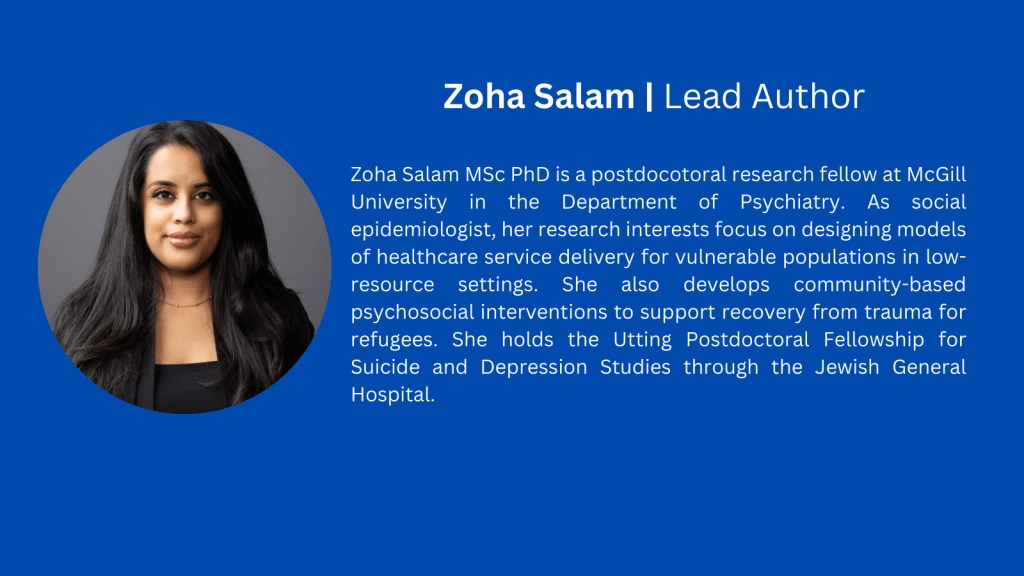
Lead Author: Zoha Salam
The Social Determinants of Health (SDOH) have long served as a cornerstone framework in public and global health, helping to address health inequities by focusing on the conditions in which individuals are born, grow, live, work, and age. Originating from the World Health Organization’s landmark 2007 report, this framework has since evolved into a widely recognized tool for understanding the factors influencing health. However, despite its utility, the framework’s limitations—particularly its neglect of systemic root causes—necessitate critical reflection.
During our IWG Global Steering Group November 2024 Think Tank session, we delved into the intricate interplay between social and structural determinants of health, highlighting how both influence health outcomes and equity. Rather than proposing alternative frameworks, the session aimed to critically examine how and why the existing SDOH framework has been established, exploring its potential limitations and unintended consequences in advancing health equity agendas across diverse contexts
The role of language in health frameworks
Our Think Tank session began with a fundamental question: Why is language important when considering the SDOH? Over the years, the term ‘social determinants of health’ has evolved into various adaptations, such as the ‘commercial determinants of health’ or the ‘digital determinants of health,’ showcasing its flexibility as a conceptual framework. Some critiques suggest replacing the term ‘determinants’ with ‘influencers’ or ‘drivers of health’ to make the framework more accessible or contextually appropriate. FS emphasized that, at its core, the SDOH framework is about the social conditions and elements that shape an individual’s life, but the way we describe these elements carries implications for how they are understood and addressed.
BB reflected on how words, while encompassing a wide range of meanings, often carry implicit associations that shape policy discourse. For instance, while the term “social” could include environmental and economic factors, it is more commonly associated with interpersonal dynamics. This disconnect between intended meaning and common understanding can subtly influence how policies are designed and implemented. BB noted that even when policymakers attempt to streamline definitions, the common associations of words often retain their power, reinforcing the need to critically examine the language we use in health frameworks.
MO shared insights from his work in the UK, where there has been a deliberate shift toward using the term “influencers of health” instead of “determinants.” This linguistic change aims to move away from the notion that these factors are fixed or deterministic, instead emphasizing their dynamic and context-dependent nature. By framing these factors as ‘influencers,’ the discourse encourages a broader examination of how systemic forces—such as economic policies, institutional racism, and governance—interact to shape health outcomes.
Integrating determinants in biomedical paradigms
Much of the research in public and global health is rooted in the biomedical paradigm, a framework that prioritizes biological and clinical aspects of health over broader systemic factors. While this paradigm has contributed significantly to medical advancements, it has notable limitations when applied to complex health determinants. Knowledge and truth are multifaceted, and a purely biomedical approach often simplifies problems, failing to account for the social and structural dynamics that shape health outcomes.
The integration of SDOH into biomedical research has been widely acknowledged as a necessary step to broaden the conversation. However, as AF noted, this integration can still fall short when viewed through a biomedical lens. The paradigm often focuses on individual-level factors, such as stress management or personal behaviours, while overlooking larger systemic issues. This narrow focus prevents researchers from critically examining entire systems and their roles in perpetuating health disparities. AF emphasized that power structures—including funders and organizations—may resist such systemic critiques, as they threaten the status quo and existing power dynamics.
BB added that funding priorities also play a significant role in shaping the scope of research. Projects framed within a biomedical context often attract more resources, as funders prioritize familiar and measurable outcomes. While there is growing lip service to addressing broader social and structural issues, the allocation of funding remains disproportionately focused on interventions that align with the biomedical paradigm. This limits the potential for transformative research and action that could address the root causes of health inequities.
Mobilizing the framework for action
One of the key challenges with the current SDOH framework is its tendency to focus heavily on downstream interventions—those aimed at mitigating the immediate impacts of health inequities rather than addressing their root causes. While it is true that anything can be considered a determinant, it is essential to recognize that these determinants manifest differently across populations and exist along a gradient of exposure to positive and negative outcomes. This nuanced understanding often gets lost in the pursuit of broad, generalized solutions.
KO emphasized that addressing health is not simply about identifying what people eat, drink, or what medicines they take; it requires a deeper understanding of the contexts in which they live. Effective research and interventions must go beyond collecting data to actively reflect on how systemic changes can be enacted. This calls for a shift from symptom-focused approaches to strategies that address the underlying patterns and structures creating health disparities.
MO added that a critical misstep in many health interventions is the assumption that experts know what people want and need. He pointed out that without directly engaging communities and listening to their perspectives, interventions risk missing the mark. Communities hold valuable insights into their own challenges and solutions, and co-creating interventions with them can help ensure that efforts are meaningful and relevant.
Structural determinants: The overlooked foundation
The term “social” SDOH often implies that these factors are individual-level issues that can be addressed through behavioral changes. This framing is inherently problematic, as it places the responsibility for health outcomes on individuals, rather than acknowledging the systemic and structural forces that shape these determinants. Moreover, the SDOH framework can sometimes present these factors as fixed and deterministic for certain populations, detracting from the root causes of inequities that perpetuate health disparities.
A clear example of this issue lies in how “race” or “ethnicity” is sometimes categorized as a social determinant. When viewed through a structural lens, it becomes evident that racial health disparities are not caused by race itself, but by structural racism—the systemic inequalities embedded in legal, economic, and political institutions. Race is not merely a social category; it also functions as a legal, economic, and political construct with profound downstream impacts on health. The material and social conditions associated with being categorized within a particular “race” are what drive health disparities, not the concept of race itself. Taking this understanding further, the socio-political legacies of systems like settler colonialism create and sustain inequities, highlighting the need for health frameworks that address these systemic drivers.
FS expanded on this idea by examining the case of expatriates and migrant workers in the Gulf. These individuals often face limited access to healthcare while working in high-risk environments without adequate protections. This example highlighted how structural determinants, such as labor policies and migration systems, directly impact health outcomes. BB emphasized the importance of community-based research to bridge the gap between micro-level lived experiences and macro-level systemic forces.
In caution, KO pointed out the challenges inherent in addressing the structural determinants of health framework. For researchers and practitioners who often operate at the individual or community level, tackling structural-level determinants can feel overwhelming and insurmountable. For example, how does one begin to unpack deeply entrenched issues such as the global monetary systems? These are vast and systemic issues that demand collective action on a scale far beyond what individual interventions can achieve emphasized the importance of balancing downstream and upstream factors, recognizing that while addressing systemic root causes is critical, downstream efforts remain necessary for immediate and tangible impacts on individuals and communities.
Moving forward
Our Think Tank session highlighted the urgency of transcending the limitations of the SDOH framework. While the SDOH has been instrumental in identifying and addressing health disparities, tackling inequities at their root demands a decisive shift toward structural determinants. Perhaps one of the most powerful insights from our conversation is the recognition of the complexity inherent in addressing upstream influencers of health. This is not a simple task, but a challenge that calls on all of us to confront this complexity head-on.
It is a call to sit with discomfort, to be aware of the limitations of our frameworks, and to be intentional in our approach. This requires a critical reflection on the language we use, the paradigms we adopt, and the systems we seek to transform. More importantly, it demands honesty about the limitations of our current approaches and a commitment to addressing the broader structures that perpetuate inequality. Only through this intentionality and a willingness to embrace the complexity of systemic change can we hope to build a future where health equity is not just an aspiration but a reality.
Special contributions from: Bettina Buabeng-Baidoo (BB), Fatima Sala (FS), Koye Oyerinde (KO), Aysha Farwin (AF), Michael Ogunyemi (MO), Oluseyi Sanyaolu (OS)
 International Working Group for Health Systems Strengthening
Leave a comment