“I think, as a Transwoman, I don’t have the patience. I don’t have the patience to wait for policies to change. If I see needs in my community, I like to do [act on] it.”
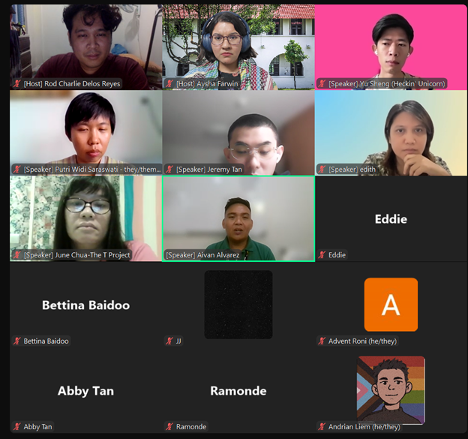
In celebration of Pride Month, Regional Leaders from the Western Pacific Region brought together LGBTQ+ advocates, allies and activists from across Asia in a panel discussion on 30 June 2024. Co-chaired by Aysha Farwin (she/her) and Rod Charlie Delos Reyes (he/him), the event featured a stellar panel of LGBTQ+ activists – Aivan Alvarez (he/him) from the Philippines, Jeremy Tan from Malaysia, Putri Widi Saraswati (they/them/she) and edith (they/them) from Indonesia and Teo Yu Sheng (he/him), June Chua (she/her) from Singapore – who shared their experiences, challenges and strides made for LGBTQ+ rights in Asia.
Under the theme “Beyond the Rainbow: Is Equality Within Reach for LGBTQ+ individuals?” the panel delved into the pressing barriers and challenges faced by the LGBTQ+ community across Asia. The conversation highlighted the importance of sustained advocacy, representation, and the remarkable resilience of LGBTQ+ individuals. Panelists shared inspiring stories of community-led initiatives and grassroots movements that drove progress toward inclusivity, despite significant societal and political hurdles.
LGBTQ+ Advocacy in Asia: A Growing Movement
A key focus of the discussion was the ongoing fight for LGBTQ+ rights and advocacy across Asia. Panelists recounted their personal journeys of navigating conservative and often hostile environments where LGBTQ+ identities continue to be stigmatized, and, in some cases, outrightly criminalized. In many regions in Asia, legal protections for LGBTQ+ individuals are sparse or entirely absent, while societal acceptance remains a significant challenge.
One panelist aptly stated,
“I think the society itself, because of people being religious, it’s [LGBTQ+ acceptance] very challenging still. It is an ongoing struggle to advocate or achieve societal acceptance.”
Despite these challenges, the LGBTQ+ movement in Asia has made steady progress. The panelists emphasized the growing visibility of LGBTQ+ individuals in public life, as more people courageously come out and advocate for their identities. This increased visibility has sparked a gradual but meaningful shift in public attitudes, particularly in urban centres where younger generations are showing greater openness to LGBTQ+ rights. However, the panelists stressed that this gradual shift did not come easily – it is the result of a relentless and ongoing fight for equal rights and representation, driven by the determination and courage of countless LGBTQ+ individuals and allies.
Panelists emphasized that advocating for LGBTQ+ acceptance and equality in Asia requires a nuanced approach, carefully balancing cultural sensitivities with the need to challenge deeply ingrained norms. This involves working not only at the political level to push for legal reforms but also within communities to build understanding and foster acceptance. The rise of LGBTQ+ organizations, Pride parades, and advocacy campaigns all form part of a larger, collective movement aimed at securing acceptance and equal rights for LGBTQ+ individuals across the region.
Addressing Multiple Forms of Discrimination
The panel then discussed the different forms of discrimination experienced by LGBTQ+ individuals. Intersectionality was a key topic during the discussion as the LGBTQ+ community in Asia faced multiple, overlapping forms of discrimination; LGBTQ+ individuals often belong to marginalized groups based on ethnicity, gender, or socioeconomic status, leading to complex and layered experiences of exclusion. For example, transgender individuals in Asia were particularly vulnerable, suffering from heightened levels of violence and discrimination not only because of their gender identity but also due to their economic precarity.
This intersection of identities magnifies the challenges LGBTQ+ individuals experience, making the fight for equality even more urgent. The panelists shared how their activism focused on this intersection of diverse identities, committing to protect the most marginalized members of the LGBTQ+ community. This intersectional approach was especially crucial in Asia, where deeply rooted societal structures often reinforced traditional gender roles and hierarchies, making it even harder for LGBTQ+ individuals to achieve visibility and equal rights. By centering intersectionality, activists emphasized that targeted interventions that address the specific needs of marginalized LGBTQ+ groups can be designed and implemented – an example of this intersectional approach was an initiative to provide safe housing for homeless transgender individuals, by the T Project in Singapore, which offered inclusive services for transexual and queer women.
Healthcare as a Fundamental Right for LGBTQ+ Individuals
Access to LGBTQ+ affirming healthcare was another major topic of discussion, especially the right to inclusive, non-discriminatory care for LGBTQ+ individuals. In many parts of Asia, LGBTQ+ individuals encounter significant barriers to healthcare, whether through discriminatory laws, biases from healthcare providers, or the absence of services tailored to their needs. These obstacles leave LGBTQ+ communities underserved and vulnerable, highlighting the urgent need for health systems to evolve towards providing sensitive and affirming care.
The panelists passionately called for health systems to recognize and address the specific needs of LGBTQ+ individuals, particularly in the areas of sexual and reproductive health. Transgender individuals, in particular, face unique challenges in accessing essential services like hormone therapy or gender-affirming surgeries, which are often either unavailable or prohibitively expensive in many Asian countries. In regions where HIV remains a major public health issue, LGBTQ+ individuals—particularly men who have sex with men— are disproportionately affected. Stigma and discrimination deter many from seeking testing or treatment, while cultural taboos surrounding sexual health further complicate access to care.
The panel emphasized the crucial role of inclusive public health initiatives that actively engage LGBTQ+ communities. Grassroots efforts, such as community-run clinics, mobile testing services, and peer education programs, have become essential in closing the gap in healthcare access. These initiatives not only provide critical services but also create a sense of community and belonging for LGBTQ+ individuals who may feel excluded from mainstream healthcare systems.
Resilience and Community Building
A key theme throughout the panel was the resilience of the LGBTQ+ community in Asia, despite the ongoing challenges of systemic discrimination, legal barriers, and social stigma. Against all odds, LGBTQ+ individuals continued to organize, support one another, and fight for their rights. This resilience is a powerful testament to the strength of grassroots movements emerging across Asia.
The panelists shared inspiring stories of community-building efforts, from the founding of LGBTQ+ organizations and shelters for homeless transgender individuals to the creation of safe spaces for LGBTQ+ youth. These community-led initiatives not only provide essential resources but also offer a sense of hope and solidarity for those who feel marginalized or unsafe, fostering a collective spirit of perseverance and empowerment.
For instance, in countries where legal protections are limited, informal support networks have become vital in providing resources, information, and advocacy for LGBTQ+ individuals. Operating discreetly, often through online platforms and personal connections, these networks create safe spaces where individuals can seek help without fear of exposure or retribution. These grassroots efforts have increasingly become lifelines for LGBTQ+ individuals, offering everything from legal advice to mental health support and ensuring that the most vulnerable members of the community can access the care and protection they need.
A panel member expressed some insights on creating the work from the grassroots,
“I think, as a Transwoman, I don’t have the patience. I don’t have the patience to wait for policies to change. If I see needs in my community, I like to do [act on] it.”
Collaboration and Solidarity
Many speakers stressed that solidarity remains strong even though each Asian nation faces its own unique set of challenges. Through sharing tools, strategies, and life lessons, activists can amplify their impact and benefit from one another’s experiences. Global alliances, local LGBTQ+ communities, and transnational advocacy initiatives have now become vital in the fight for equality. These partnerships help raise awareness of LGBTQ+ rights on a global scale and present a unified front against prejudice.
Echoing these perspectives, the panelist from Philippines proudly said,
“We have now united movements to be honest unlike before. In the Philippines we have some factions, but lately have a united call to our President for prioritizing this SOGIESC Bill in the Philippines.”
Hope Amidst Struggles
The road to achieving full equality for LGBTQ+ individuals in Asia is long but the panel emphasized the tremendous progress that has already been achieved. Through resilience, community-building and strategic advocacy, the LGBTQ+ movement IN Asia continues to grow stronger, even in the face of significant challenges. Flexibility, solidarity and grassroots support remain key to overcoming the obstacles ahead.
As the panel discussion made clear, the fight for LGBTQ+ rights in Asia goes beyond legal reforms or societal acceptance—it is about creating a world where everyone can live with dignity, safety, and love, regardless of their sexual orientation or gender identity.

Authors

 International Working Group for Health Systems Strengthening
Leave a comment